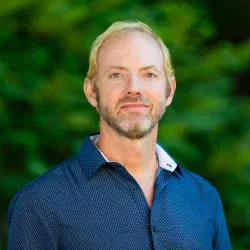
Brendan is Principal Engineer at the Applied Social Media Lab at Harvard's Berkman Klein Center and jointly with the Applied Technology Lab at Harvard's School of Engineering and Applied Sciences.
Brendan is innovating how people and AI agents establish trust and collaborate online. Advanced Digital Identity: I lead research and development on user-owned identity that enables people to form and manage their social networks and delegated agents in a verified, portable, and private manner, and prove specific facts (e.g. their age, an account they control, that they met someone in person) without handing over the underlying data. Our open-source reference implementation, Keyring, is built on peer-to-peer relationship credentials and a graduated model of trust. I authored the underlying Decentralized Trust Graph Credentials specification in collaboration with the Trust over IP Foundation's Decentralized Trust Graph Working Group.
The same primitives work for individuals, communities, organizations, and AI agents, seating humans and AI agents on one trust substrate. LLM Engine: I am the initiator and Principal Engineer on LLM Engine, the Applied Social Media Lab's flexible service for deploying LLM agents into live group conversations across Slack, Zoom, and NextSpace. The focus is agents that facilitate and enhance discussion for users with diverse goals and needs. I was also a co-author of Mapping LLM Tools for Public Discourse, Pluralism & Social Cohesion (2025).


